
Athabasca University's Master of Science – Earth System Science (MSc ESS) is an interdisciplinary graduate program grounded in an Earth-systems perspective—one that examines how the atmosphere, hydrosphere, cryosphere, geosphere, and biosphere interact, and how these interconnected systems are influenced by both natural processes and human activities.
This page is designed to help you explore research fit by outlining the program’s six focus areas and highlighting faculty whose research aligns with each area. Use these profiles to refine your interests, identify promising research directions, and connect with potential supervisors for thesis or project work.
Environmental Science
Quaternary Earth Systems
Environmental Analytics
Bioinformatics
| This focus area integrates biological sciences, computational methods, and data analytics to study biological processes within an Earth-system context. Students work with genomic, microbial, and related biological datasets to investigate how organisms and ecosystems respond to environmental conditions and change. Research may explore biodiversity patterns, ecosystem evolution, and biosphere–environment interactions, highlighting how biological data contribute to understanding Earth-system dynamics. |
Junye Wang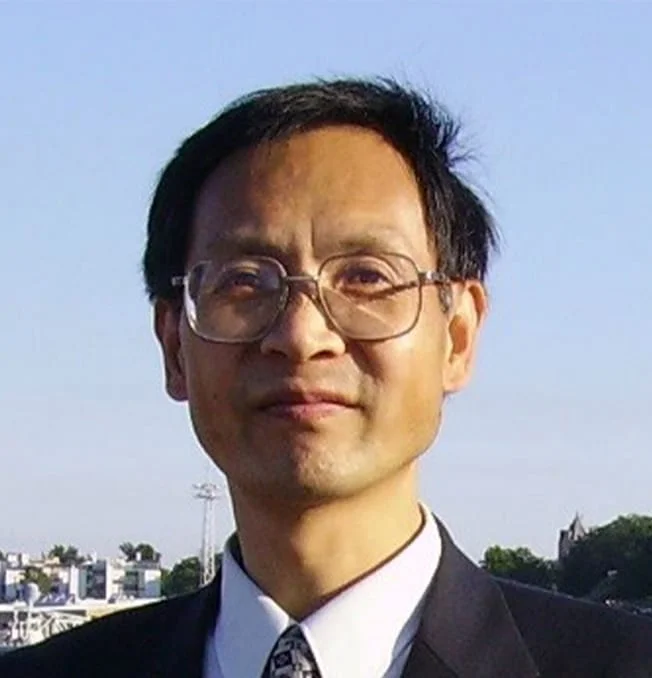 Email
EmailProfile | I am a full professor in computational sustainability and environmental analytics, specializing in multiscale, multidisciplinary modeling of energy and environmental systems. My work spans micrometer to watershed scales, combining physical and data-driven models. Applications include ecosystems, water, greenhouse gases, bioremediation, soil carbon, pollutant transport, bioenergy, and machine learning for environmental management, air pollution, and resource security. |
Shauna Zenteno Email
EmailProfile | I focus on understanding environmental impacts related to water quality and their downstream effects on health and food security. I work collaboratively with other researchers and First Nations communities, integrating Traditional Knowledge with multidisciplinary Western science approaches. My current research examines the role of biofilms in preserving biodiversity and aquatic system health, with the goal of restoring ecosystems impacted by human development and climate change. |
Shawn Lewenza Email
EmailProfile | My research focuses on oil sands microbiology, bioremediation, genomics, biofilms and antibiotic resistance. We use genetic and bioinformatic approaches to identify specific genes required for resisting antibiotics or degrading oil sands pollutants. Our current focus is the application of naphthenic acids biosensors for monitoring NA in oil sands tailings and to identify NA degrading bacteria for applications in bioaugmentation. |
Srijak Bhatnagar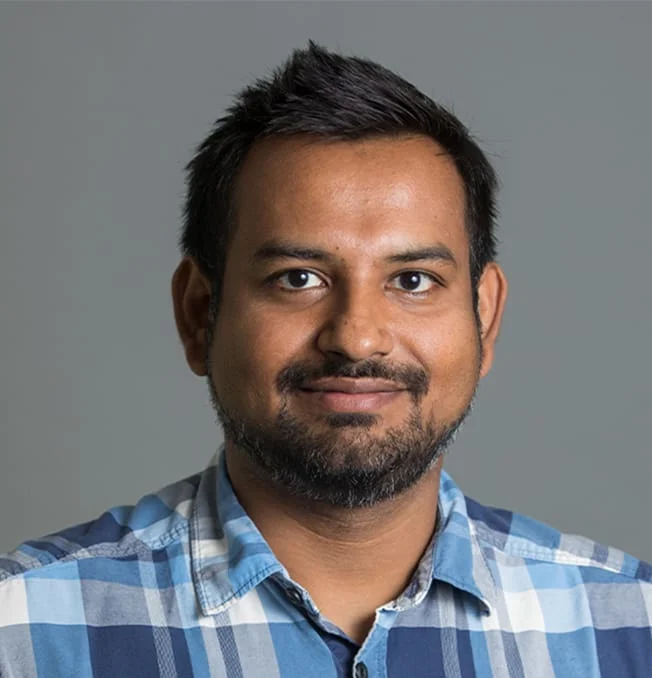 Email
EmailProfile | My interest is in studying microbial ecology of contaminated ecosystems, with an emphasis on global-scale impacts, bioremediation, and biomonitoring using DNA/RNA-based sequencing. This includes leveraging large public data sets for regional, continental, and global trends in microbial communities and their roles and interconnectedness in a one health paradigm. |